




Few fictional characters have seeped so deeply into the global imagination as Dracula. Born in literature in 1897 but fed by thick layers of folklore, social anxieties, and East-European history, Bram Stoker’s vampire became an archetype: the embodiment of dark seduction, hunger for power, and fear of the “other.” In Romania, his name is inextricably linked to a real historical figure, the Wallachian ruler Vlad Țepeș. But how much of Dracula is actually Vlad? And how much is pure fiction, shaped by the tastes of a world on the cusp of modernity?
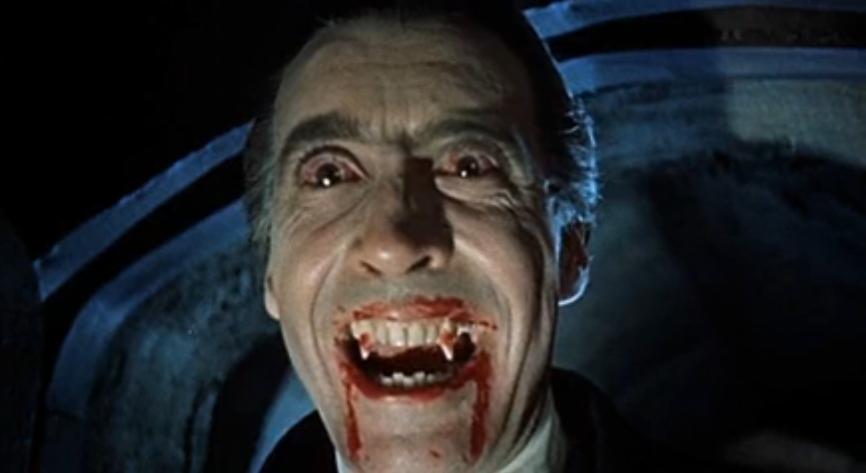
Christopher Lee as the title character in Dracula (1958). Credit: Internet Archive/Wikimedia Commons. Public domain
The origin of the vampire before Stoker
Myths about moroi, strigoi, upiri, or nosferatu circulated throughout Eastern Europe long before Stoker. They braided fears of death, disease, and sexual morality with apotropaic practices (garlic, stakes, decapitation). Western literature had already prepared the ground: The Vampyre (John Polidori, 1819) and the Victorian-Gothic penny dreadful Varney the Vampire (1845–1847) sketched an aristocratic, cosmopolitan, morally ambiguous vampire—a direct forerunner of the Count.
Bram Stoker and the “birth” of the Count
The novel Dracula (1897) blends diaries, letters, and reports to build an atmosphere of modern investigation pitted against an archaic evil. Stoker sets the Count’s castle at the Borgo Pass (today the Tihuța Pass), writes the vampire into a noble lineage, and grants him powers (metamorphosis into bat, wolf, or mist; crawling down walls; control over storms) as well as limits: the sun weakens him, Christian symbols repel him, and native soil sustains him. Unlike later conventions, daylight does not burn him; it exposes and makes him vulnerable.
From page to screen: making a global myth
Dracula became universal with cinema. Nosferatu (1922) turned the Count into a spectral beast; Bela Lugosi (1931) gave him the unmistakable accent and theatrical cape that would become clichés; Christopher Lee (the 1950s–’70s) intensified his violent eroticism; later adaptations—through the blockbusters of the 1990s and on to anime, video games, or family animations—have continually recalibrated the archetype. Today, Dracula is a global brand, a platform character relaunched each generation to speak to the era’s fears: epidemics, migration, corrupt power, or the seductions of technology.
Vlad Țepeș: the man behind the name
Vlad III, called Țepeș (“the Impaler,” c. 1431–1476), ruler of Wallachia, is remembered for his harsh policies of order, internal conflicts with the boyars, and confrontation with the Ottoman Empire. The nickname “Țepeș” comes from his preferred method of execution, while the name “Dracula/Drăculea” derives from his father, Vlad II “Dracul,” a member of the Order of the Dragon. In documents, “Drăculea” originally means “son of Dracul,” though in Western usage it often slipped semantically toward “diabolical.”
What did Stoker take from Țepeș?
The direct link between the novel and Țepeș is more onomastic and atmospheric than biographical. Stoker consulted fragmentary historical accounts of a “cruel” Wallachian voivode, borrowed the name “Dracula” and the echo of his reputation, but did not copy his life, alliances, or political geography. The Count in the novel is not a literary portrait of Vlad, but a synthesis of vampire folklore, Victorian “Transylvanian” exoticism from travelogues, and late-19th-century Western anxieties (fear of degeneration, contamination, invasion “from the East”).
What doesn’t come from Țepeș?
The vampire code—need for blood, immortality, repulsion by sacred symbols, shapeshifting—has nothing to do with chronicles about Vlad. Nor do the geographical details (the castle in the Tihuța Pass) or much of the novel’s “Transylvanian” color. These belong to an imaginative geography built from travel guides, essays on rural superstitions, and the Gothic imagination of Victorian London.
Dracula as a cultural mirror
Why does Dracula persist? In every era, the Count reflects the time’s fears and desires:
- Sexuality and control: the vampire seduces and corrupts, staging anxieties about morality and emancipation.
- Disease and contagion: the bite is a perfect metaphor for epidemics (from tuberculosis to AIDS and into the post-pandemic imaginary).
- Reverse colonialism: an aristocrat from Europe’s periphery “invades” the imperial capital—a fantasy of the periphery’s revenge on the center.
- The fear of immortality: the promise of eternal life proves a burden rather than a blessing.
Romania between myth and identity
In Romania, the relationship with Dracula is ambivalent. On one hand, tourism has woven the name into routes, museums, and festivals, and Bran Castle has often been promoted in popular imagination as “Dracula’s castle,” though its historical ties to Țepeș are weak. On the other hand, there is a desire to separate the historical hero—defender of borders and internal order—from the fictional vampire who absorbed the world’s attention. Out of this tension have sprung cultural campaigns that try to explain the difference between myth and reality while—inevitably—leveraging the Count’s brand power.
How Dracula shaped the vampire canon
Without Stoker, it’s hard to imagine many conventions we now take for granted: the stake through the heart, the association with garlic and the crucifix, aristocratic seduction, the pact with darkness, and daytime limitations. Later adaptations standardized other traits (for instance, burning in sunlight) that in the novel were mere weaknesses, not annihilations. In video games, comics, anime, TV series, and parodies, “Dracula” becomes by turns absolute antagonist, melancholic antihero, or a paternal, comic-monstrous figure—proof of the myth’s elasticity.
Conclusion
Dracula is a bridge between history and imagination: he bears a real name, “Drăculea,” and the shadow of a ruler with a bloody reputation, Vlad Țepeș; yet as a character he lives in a purely fictional space, born of narrative needs and the fears of an age. In global culture, the Count serves as a screen onto which we project—ever differently—our questions about power, desire, otherness, and death. The link to Vlad Țepeș remains significant as a symbolic and onomastic trigger, not as identity. And it is precisely this ambiguity—between history and story—that ensures the myth a long life, well past the setting of any sun.
Leave a Reply